Dying Earth
EXTINCTIONS AND HUMANS
Extinctions caused by humans are generally considered to be a recent, modern phenomenon. However, humanity's first significant contribution to the rate of
global extinction may have occurred during the past 100,000 years, when North and South America and Australia lost 74 to 86% of the genera of "megafauna" -mammals greater than 44 kg. In Australia, where the earliest human remains are dated to approximately 64,000 years, the great majority of the 22 identified genera of large land animals disappeared between 30,000 and 60,000 years ago. In the Americas, almost 80% of large-bodied genera became extinct. Extraordinary creatures, such as sabre-toothed cats, mammoths, giant armoured glyptodonts and giant ground-sloths, all disappeared some time between 11,000 and 13,000 years ago, coinciding with the dates of the first clear evidence of a human presence there.
Island megafaunas - like giant birds known as moas in New Zealand, the dodo on Mauritius, giant lemurs and the extraordinary elephantbird in Madagascar, or large rodents and ground-sloths in the Caribbean - survived until much more recently than the continental faunas. All seem to have disappeared within a few hundred years after the arrival of humans - in the case of the moas within the last 300 years.
THE “SIXTH WAVE”
The rapid loss of species that we are witnessing today is estimated by some xperts to be between 1,000 and 10,000 times higher than the “background”
or expected natural extinction rate (estimated at one species every four years). Natural extinction rate is between 11- 24 spices per year. Unlike the mass-extinction events of geological history, the current extinction phenomenon is one for which a single species - ours - appears to be almost wholly responsible. Such a deteriorating situation is being referred to as “the
sixth extinction crisis”, after the five known extinction waves in the Ordovican, Devonian, Permian, Triassic and Cretaceous Periods.
The frequently asked question of “how many species have gone extinct in the last 100 years” is difficult to answer because of problems in recording contemporary
extinction events. Decline and eventual extinction may take place over many years, or even centuries in the case of very long-lived organisms like some of the
large mammal and tree species. The final stages of extinction are seldom observed except those caused by extreme events such as the excessive hunting of the passenger pigeon Ectopistes migratorius or the mass extinction of native snails in French Polynesia and Hawaii following the introduction of the predatory snail Euglandina rosea to Pacific Islands. Since 1500 AD, 820 extinctions have been recorded.
PROFILES IN RED
The 2004 IUCN Red List of Threatened Species tells us that the global extinction crisis is as bad, or worse, than we believed. A total of 15,589 species of plants and animals are known to face a high risk of extinction in the near future, in almost all cases as a result of human activities. This includes 32% (one in three) of
amphibian species, 24% (one in four) of mammal species, 12% (one in eight) of bird species, 25% (one in four) of conifers and 52% of cycads
(an ancient group of plants). Indonesia, India, Brazil and China are among the countries with the most threatened mammals and birds, while plant species are declining rapidly in South and Central America, Central and West Africa, and Southeast Asia.
The IUCN Red List highlights the plight of a range of animals and plants, from the Pemba flying fox to the King Pilly pine.
Aders duiker (Cephalophus adersi). This antelope which occurs in Kenya and Tanzania moved from Endangered to Critically Endangered since 2003 because of
substantial population declines caused by declining habitat and illegal hunting. The state of the world’s threatened bird species is worse than ever.
Since 1994 the number of bird species threatened with global extinction has risen to 12%. Of the new total, 1,175 (99%) are at risk
of extinction from human activities. Sao Tome free-tailed bat (Chaerephon tomensis). This bat has moved up the threatened scale from Vulnerable to Critically Endangered. It is known to occur in only two sites, despite extensive searches. Its coastal forest and savanna habitats are being destroyed through tourism and agricultural development. The number of threatened reptiles increased from 253 in 1996 to 304 in 2004. The number of Critically Endangered species has increased from 41 to 64 and Endangered from 59 to 79 species. St Helena olive (Nesiota elliptica). Listed in 2003 as Extinct in the Wild, this symbolic species is now Extinct. The last known tree surviving in the wild died in 1994 and the only known plant still in cultivation died in November 2003. No other live material (plants, seeds or tissues) remain in local or international collections. A total of 8,321 threatened plants are listed. This is around 2% of the world’s described plants, but as only approximately 4% of the world's described plants have been evaluated, the true percentage of threatened plant species is much higher.
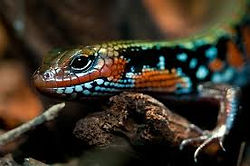
Giant Hispaniolan galliwasp (Celestus warreni). Moving from Near Threatened to Critically Endangered, this lizard is thought to have declined by at least 80% over the last 20 years. It is threatened by habitat loss, especially deforestation for agricultural activities (planting crops and creating pastures). The galliwasp is also
killed by local people who mistakenly consider it to be venomous. Galliwasps are also killed by dogs, cats and mongooses.
A CATEGORICAL THREAT
Almost all the factors that have led to the extinction of species in the modern era continue to operate, many with ever-increasing intensity. While these factors vary in intensity and relative importance in the three major biomes (the land, inland waters and the seas), certain common threads emerge.
Major threats to ecosystems and biological diversity (biodiversity) are:
• Habitat loss and fragmentation
• Over exploitation (extraction, hunting, fishing etc.)
• Pollution
• Invasions of alien species (e.g. cats and rats on Ascension island)
• Global climate change (changes in migratory species patterns, coral bleaching,
etc.)
Habitat Loss and Degradation is the most pervasive threat to birds, mammals and amphibians, affecting 86% of all threatened birds, 86% of the threatened mammals assessed and 88% of the threatened amphibians. Exploitation, including hunting, collecting, fisheries and fisheries by-catch, and
the impacts of trade in species and species' parts, constitutes a major threat for birds (30% of threatened birds), mammals (33% of threatened mammals),
amphibians (6% of threatened amphibians), reptiles and marine fishes. Alien Invasive Species are a significant threat, affecting 326 (30%) of all
threatened birds, and 212 threatened amphibian species (11%). The commonest cause of extinction of bird species since 1800, especially those on islands, is the introduction of alien invasive species such as the black rat.
WHY SHOULD WE CARE?
Living organisms keep the planet habitable. Plants and bacteria carry out photosynthesis, which produces oxygen. Trees absorb carbon dioxide, which can
help in the fight against global warming. The monetary value of goods and services provided by natural ecosystems (including gas regulation, waste treatment, and nutrient recycling) is estimated to amount to some 33 trillion dollars per year – nearly twice the global production resulting from human activities.
Many species are of immense value to humans as sources of food, medicines, fuel and building materials. Between 10,000 and 20,000 plant
species are used in medicines worldwide. Currently about 100 million metric tons of aquatic organisms, including fishes, molluscs, and crustaceans, are taken from the wild every year and represent a vital contribution to world food security. Meat from wild animals (wild meat) forms a critical contribution to food
sources and livelihoods in many areas particularly in countries with high levels of poverty and food insecurity. A huge range of species are involved
including monkeys, tapirs, antelopes, pigs, pheasants, turtles and snakes. The diversity of nature helps meet the recreational, emotional, cultural,
spiritual and aesthetic needs of people. - IUCN Species Survival Commission

BIRDS
Birds occur in nearly every habitat on the planet and are often the most visible and familiar wildlife to people across the globe. As such, they provide an important bellwether for tracking changes to the biosphere. Declining bird populations across most to all habitats confirm that profound changes are occurring on our planet in response to human activities.
A 2009 report on the state of birds in the United States found that 251 (31 percent) of the 800 species in the country are of conservation concern. Globally, BirdLife International estimates that 12 percent of known 9,865 bird species are now considered threatened, with 192 species, or 2 percent, facing an “extremely high risk” of extinction in the wild — two more species than in 2008. Habitat loss and degradation have caused most of the bird declines, but the impacts of invasive species and capture by collectors play a big role, too.
FISH
Increasing demand for water, the damming of rivers throughout the world, the dumping and accumulation of various pollutants, and invasive species make aquatic ecosystems some of the most threatened on the planet; thus, it’s not surprising that there are many fish species that are endangered in both freshwater and marine habitats.
The American Fisheries Society identified 700 species of freshwater or anadromous fish in North America as being imperiled, amounting to 39 percent of all such fish on the continent. In North American marine waters, at least 82 fish species are imperiled. Across the globe, 1,851 species of fish — 21 percent of all fish species evaluated — were deemed at risk of extinction by the IUCN in 2010, including more than a third of sharks and rays.


MAMMALS
Perhaps one of the most striking elements of the present extinction crisis is the fact that the majority of our closest relatives — the primates — are severely endangered. About 90 percent of primates — the group that contains monkeys, lemurs, lorids, galagos, tarsiers, and apes (as well as humans) — live in tropical forests, which are fast disappearing. The IUCN estimates that almost 50 percent of the world’s primate species are at risk of extinction. Overall, the IUCN estimates that half the globe’s 5,491 known mammals are declining in population and a fifth are clearly at risk of disappearing forever with no less than 1,131 mammals across the globe classified as endangered, threatened, or vulnerable. In addition to primates, marine mammals — including several species of whales, dolphins, and porpoises — are among those mammals slipping most quickly toward extinction.
PLANTS
Through photosynthesis, plants provide the oxygen we breathe and the food we eat and are thus the foundation of most life on Earth. They’re also the source of a majority of medicines in use today. Of the more than 300,000 known species of plants, the IUCN has evaluated only 12,914 species, finding that about 68 percent of evaluated plant species are threatened with extinction.
Unlike animals, plants can’t readily move as their habitat is destroyed, making them particularly vulnerable to extinction. Indeed, one study found that habitat destruction leads to an “extinction debt,” whereby plants that appear dominant will disappear over time because they aren’t able to disperse to new habitat patches. Global warming is likely to substantially exacerbate this problem. Already, scientists say, warming temperatures are causing quick and dramatic changes in the range and distribution of plants around the world. With plants making up the backbone of ecosystems and the base of the food chain, that’s very bad news for all species, which depend on plants for food, shelter, and survival.
REPTILES
Globally, 21 percent of the total evaluated reptiles in the world are deemed endangered or vulnerable to extinction by the IUCN — 594 species — while in the United States, 32 reptile species are at risk, about 9 percent of the total. Island reptile species have been dealt the hardest blow, with at least 28 island reptiles having died out since 1600. But scientists say that island-style extinctions are creeping onto the mainlands because human activities fragment continental habitats, creating “virtual islands” as they isolate species from one another, preventing interbreeding and hindering populations’ health. The main threats to reptiles are habitat destruction and the invasion of nonnative species, which prey on reptiles and compete with them for habitat and food.

INVERTEBRATES
Invertebrates, from butterflies to mollusks to earthworms to corals, are vastly diverse — and though no one knows just how many invertebrate species exist, they’re estimated to account for about 97 percent of the total species of animals on Earth . Of the 1.3 million known invertebrate species, the IUCN has evaluated about 9,526 species, with about 30 percent of the species evaluated at risk of extinction. Freshwater invertebrates are severely threatened by water pollution, groundwater withdrawal, and water projects, while a large number of invertebrates of notable scientific significance have become either endangered or extinct due to deforestation, especially because of the rapid destruction of tropical rainforests. In the ocean, reef-building corals are declining at an alarming rate: 2008’s first-ever comprehensive global assessment of these animals revealed that a third of reef-building corals are threatened.
- Center for biological diversity


MASS EXTINCTION
The world is, and always has been, in a state of flux. Over hundreds of millions of years, continents have broken apart, oceans appeared, mountains formed and worn away. With geological change come changes in living things: species, populations, and whole lineages disappear, and new ones emerge. Extinction is therefore a natural process. According to the fossil record, no species has yet proved immortal; as few as 2-4% of the species that have ever lived are believed to survive today. The remainder are extinct, the vast majority having disappeared long before the arrival of humans.
But the rapid loss of species we are seeing today is estimated by experts to be between 1000 and 10,000 times higher than the “background” or expected natural extinction rate (a highly conservative estimate). Unlike the mass extinction events of geological history, the current extinction phenomenon is one for which a single species - ours - appears to be almost wholly responsible. This is often referred to as “the sixth extinction crisis”, after the five known extinction waves in geological history. The number of species known to be threatened with extinction has topped 16,928. Their ranks include familiar species like the Polar Bear, Hippopotamus, sharks, freshwater fish and Mediterranean flowers. Marine species are proving to be just as much at risk as their land-based counterparts.
Photo of Sumatran rhinos by: Save the Rhino International


Say stop to holocaust against animals, environment and Earth