Dying Earth


tons of waste dumped in oceans this year
tons of water used in meat production this year

tons of melted ice worldwide this year
tons of CO2 emitted into the atmosphere this year
tons of hazardous waste thrown out this year
tons of seafood produced so far this year

tons of discarded fish globally this year
hectares of forests cut down or burned this year
hectares of replanted forests


tons of plastic waste dumped in oceans
tons of pesticides used
kilograms of discarded meat this year
number of species gone extinct this year
kilos of antibiotics use in livestock farms (US) this year
One way to influence the world is through the products you buy.
When you buy stuff you don't just chose the product. You also chose the story behind it.
you have the power to change the world, and your actions matter
make the change for environment animal and for your future
These are the numbers of animals killed worldwide by the meat, egg, and dairy industries since you opened this webpage. These numbers do NOT include the many millions of animals killed each year in vivisection laboratories. They do NOT include the millions of dogs and cats killed in animal shelters every year. They do NOT include the animals who died while held captive in the animal-slavery enterprises of circuses, rodeos, zoos, and marine parks. They do NOT include the animals killed while pressed into such blood sports as bullfighting, cockfighting, dogfighting, and bear-baiting, nor do they include horses and greyhounds who were exterminated after they were no longer deemed suitable for racing. Statistic counter by: adaptt.org

150 Billion yearly killed animals.


antibiotics use for human disease (US) this year
people who died from hunger in the world, this year
In slaughterhouses, laboratories, shelters, by hunting, fishing and through destruction of their natural habitat.
Real time statistic algorithm by: worldometers.info and theworldcounts.com
Rapid population growth is a problem
The rapid increase of human population is putting an incredible strain on our environment. While developed countries continue to pollute the environment and deplete its resources, developing countries are under increasing pressure to compete economically and their industrial advancements are damaging as well. The demands that this growth places on our global environment are threatening the future of sustainable life on earth. One of the largest environmental effects of human population growth is the problem of
global warming.The energy production (via power plants and coal burning) that is needed to support human life is increasing the emission of greenhouse gases into the atmosphere, which can lead to rising global temperatures. The more automobiles in use on the planet also contributes to the pollution problem and the injection of carbon dioxide into the atmosphere. Some scientists fear that global warming will lead to rising sea levels and extreme weather conditions in the future. In order to support the growing population, forests are being destroyed at an alarming rate. Many countries are constantly cutting down their forests to clear land for farming and to make room for housing.
Deforestation is harmful to the environment for several reasons. The tropical moist forests that are being lost provide homes for some of the most diverse animal and plant life on the planet. The clearing of these forests results in the extinction of many species, possibly including hundreds that are yet unidentified by scientists. Deforestation also adds to the problem of global warming, because trees naturally absorb carbon dioxide from the atmosphere.
Humans also continue to put a great demand on the natural resources of our planet. Many non-renewable resources are being depleted due to the unrestrained use of fuel and energy. Many parts of the world also suffer from a shortage of food and water. The growth of population puts larger demands on our already limited resources. The environment on earth is suffering from the growth of global population. The depletion of resources and biodiversity, the production of waste, and the destroying of natural habitat are serious problems that must be addressed in order to ensure that life on earth will be sustainable throughout the next century.
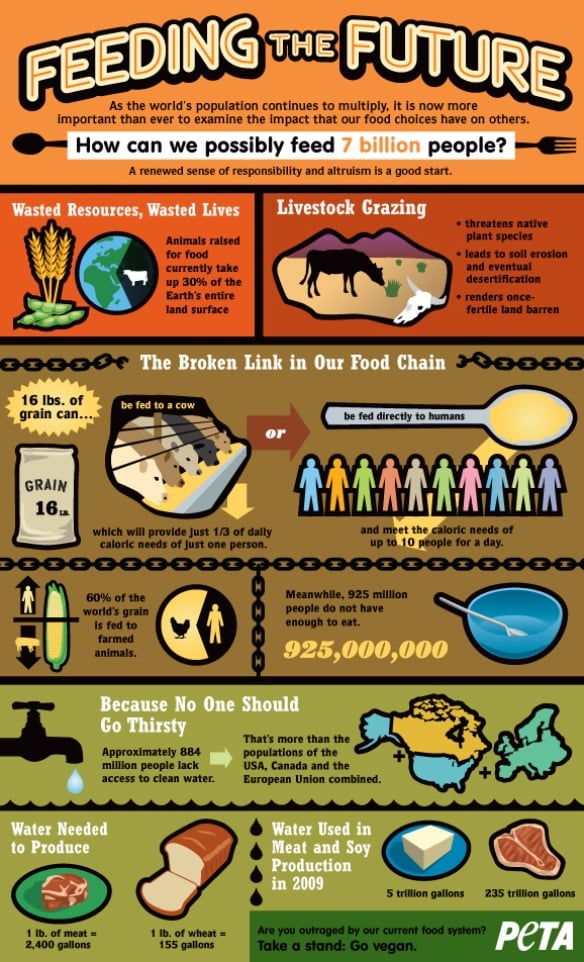
According to the US Department of Agriculture nearly 10 BILLION animals are raised and killed for food each year in the United States alone. While there are multiple reasons for you to start cutting factory farmed animals out of your diet, one of the most important reasons is one that is not often talked or thought about -the destructive toll that is taken on the environment from the mass production and consumption of factory farmed animals and animal products. It’s interesting how this aspect is, for the most part, entirely overlooked. No one ever really stops to think about how much land and resources are actually needed to produce enough animals and products to cater to the excessive over-consumption of animals across the globe. Just think about how much these animals need to eat and drink, feeding 10 Billion animals in the US alone is considerably more than feeding the entire planet. Currently according to the UN, raising animals and producing the feed for them uses 30% of the Earth’s land mass- wow.
260 Million Acres (and counting) of US forests have been clear-cut to create land for producing feed for livestock. Dying Earth
70% Of the grain that is produced in the US is fed to farm animals

The Triple Whopper Environmental Impact of Global Meat Production


PRESS ON THIS PICURE
Deforestation
Deforestation is the practice of clearing the natural forests for the purpose of agriculture, logging, etc. It is one of the numerous environmental issues which are threatening the basic existence of several plants and animals of the world today. It's obvious that humans will bear the brunt of deforestation in the long run, but its effects on the lifeforms endemic to the particular region are bound to be much more prominent.Deforestation Facts and Figures - A Global Perspective
How much time do we have?
days remaining to collapsing of biosphere
79,452,000t
CO2 / Per day
397,260,000,000t
CO2 / 5000 days
The Greenland, Alaskan and West Antarctic ice sheets together hold about 25% of the fresh water on the planet . The effects of the collapse of either ice sheet would be huge.Only in a west Siberian
permafrost alone contains some 70 billion tonnes of methane, a quarter of all the methane stored on the land surface of the world. This is equivalent to emitting 1.7 trillion tons of CO2 whichis more greenhouse gas
than has been emitted by humans in the past 200 years. Once you lost one of these ice sheets, there's no putting it back for thousands of years, if ever.If they disintegrate, sea level could rise nearly 20meters and average temperature can increase to by 5 degrees possibly in only one decade . This would swamp and destroy most cities and ports, as well a much of the best agricultural land. Where now 6 billion people. Disappeared will be about 70 percent of all animal and plant species. Earth will be destroyed.
Metahne / 5000 days
4,383,560,000t
This is a rough calculation. Significant amounts of methane are also oxidised by microorganisms (called methanotrophs) which use the methane as a source of carbon and energy. Atmospheric lifetime of methane extends to about 12 years and CO2 about 50 - 200 years. And some of this CO2 also use plats ( phytoplankton, trees and other green plants) via photosynthesis.
Melting of arctic shields and permafrost


ppm of co2 right now in atmosphere.

Riau Indonesia Photo by: H dragon

+ 70,000,000,000 t
+
Metahne / Per day
876,712t
( from 2014 to 2026 )
The statistical data on deforestation reveals that seven countries of the world account for 60 percent of the total deforestation on the planet. These include Brazil in Latin America, Canada and the United States in North America, Indonesia and China in Asia, Russia in Europe, and the Democratic Republic of Congo in Africa. The data compiled by the World Resources Institute reveals that the planet has already lost 80 percent of its forest cover to deforestation, and going by the alarming rate at which the trees are being cut, it won't take much time to reach the cent percent mark.
The West African region, which boasted of lush green tropical forests in the 19th century, has been stripped of 90 percent of its forest cover over the last century. The same trend continues in the two remaining rainforest biomes in South America and Asia respectively. Going by the statistics compiled by the United Nations Framework Convention on Climate Change (UNFCCC), agriculture is the most important cause of deforestation on the planet. While subsistence farming accounts for 46 percent of the total deforestation in the world, commercial agriculture is responsible for 32 percent. Other prominent causes include logging (14 percent) and fuel requirements (5 percent).
Deforestation in the Amazon
Even though the vast area of the Amazon Basin may make it look insignificant, the rate of deforestation in the Amazon is higher than in any other part of the world. The Amazon rainforest, which roughly accounts for about 2,488,642 square miles, has lost 15 percent of its forest cover since 1970. Brazil, which is home to approximately one-thirds of the remaining rainforests of the world, has been experiencing an average loss of 21,536 square miles of forest cover annually, over the last few years. This, however, appears to be insignificant, as it accounts for mere 0.8 percent of the total forest cover of the country. Around 60 - 70 percent of the deforestation in Amazon can be attributed to cattle ranches, while a significant part of the remaining 30 percent can be attributed to small-scale subsistence agriculture. Recent studies have revealed that deforestation for the purpose of large-scale farming is relatively low.
Additionally, deforestation statistics reveal that the United States lost 831 square miles of the forest cover between 2001 and 2005. Regeneration of depleted forest cover, new forest plantations, declaring forested areas as protected or reserved, etc., are some of the popular solutions that are being implemented around the world today. Even though the forest cover raised by these methods is inferior as compared to the primary forest cover, it can still keep the numerous problems associated with deforestation at bay. - Buzzle
Central America has 50% of its rainforests. South America has 70% of its rainforests. The Philippines have lost 90% of its rainforests!
Madagascar has lost 95% of its rainforests! El Salvador has lost 70-85% of its rainforest Sumatra has 15% of its rainforests left.

Most in the Amazon and Sumatrian rainforest, For cattle ranching , soy feed and palm oil.
13 Million of forest cut down
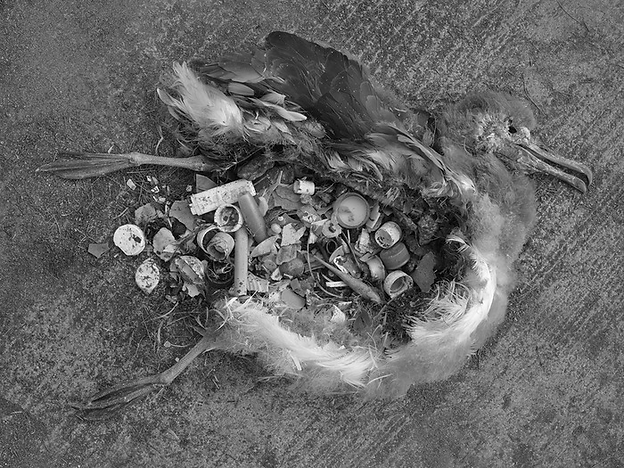

Over 10 million seabirds, dolphins and fish are killed by ocean pollution each year
The most toxic waste material dumped into the ocean includes dredged material, industrial waste, sewage sludge, and radioactive waste. Dredging contributes about 80% of all waste dumped into the ocean, adding up to several million tons of material dumped each year. Rivers, canals, and harbors are dredged to remove silt and sand buildup or to establish new waterways. About 20-22% of dredged material is dumped into the ocean. The remainder is dumped into other waters or landfills and some is used for development. About 10% of all dredged material is polluted with heavy metals such as cadmium, mercury, and chromium, hydrocarbons such as heavy oils, nutrients including phosphorous and nitrogen, and organochlorines from pesticides. Waterways and, therefore, silt and sand accumulate these toxins from land runoff, shipping practices, industrial and community waste, and other sources. When these materials find their way into the ocean, marine organisms suffer toxic effects and seafood is often contaminated. marinebio.org
River and ocean pollution
3 Billion tons of waste dumped in ocean
Plastic debris in the ocean is a global problem that continues to worsen. While as much as 1.6 billion pounds of plastic end up in the ocean every year, plastic does not biodegrade, meaning that the plastic that ends up in the ocean remains there indefinitely. This poses a threat to marine life in several ways.
For larger animals, colorful or shiny plastic items can be mistaken for prey, like fish and squid, and are eaten by seabirds, marine mammals, fish and sea turtles. Death can come quickly when the plastic damages the digestive system or animals may starve when they feel full but have stomachs full of man-made objects that don’t digest and have no nutritional value. Animals can also become entangled in plastic debris and become injured or drown.
To make matters even worse, plastic tends to sop up dangerous toxic chemicals like PCBs and DDT and endocrine disruptors like Bisphenol A, fire retardants and phthalates—chemicals that bioaccumulate, or build up, in larger animals and that can end up in the seafood we eat. In recent years researchers have discovered large expanses of the ocean known as gyres that have effectively become “garbage patches” as swirling sea currents accumulate astonishing volumes of trash from faraway coasts. Oceana supports our partners that are working to remedy this emergent threat to marine life everywhere. oceana.org

29 Billion tons of CO2 per years
87 percent of all human-produced carbon dioxide emissions come from the burning of fossil fuels like coal, natural gas and oil.
The natural environment encompasses all living and non-living things occurring naturally on Earth or some region thereof. It is an environment that encompasses the interaction of all living species. And the one part of the environment is also a human being. We are humane, but we are still animals-like it or not. There is nothing natural about what we are doing if you define natural as hunting and killing other species, animal farming, deforestation etc. We believe that nature is something that can be owned, that we are better than it and the creatures that inhabit it. We are degrading our biosphere to the point we may very likely not be able to exist in it anymore. There is still little time. The one way to new better world is that we begin respect nature, animals and other humans. And another way to better world is that we change our lifestyle and stop eat and buying stuff that destroys our Earth and our life, and start supporting things which will bring us future.

By 2048 all current fish, seafood species projected to collapse. GO VEGAN SAVE THE WORLD!


Say stop to holocaust against animals, environment and Earth